Thailand’s Chao Lay People.

In murky water, a Chao Lay diver comes out from inside a fish trap on the seabed, having netted all the trapped fish inside. he will now take the fish to the surface. © Colin Munro Photography

Changing lives for the remaining sea nomads of the Andaman coast

In Southeast Asia, as in so much of the World, traditional ways of life are disappearing fast. Ethnic groups and cultures are being absorbed into the modern world before our very eyes. In the past few decades nomadic groups that roamed across national borders have largely been settled in villages, and so their way of life rapidly evolves to accommodate these changes. The internet, mass tourism, and the accelerated rate at which ‘undeveloped’ land is disappearing have speeded up this process. But, even among the new tourist hotels and shopping malls some, like the Chao Lay, still cling on, for now.

Chao lay, in Thai language, literally translated means People of the Sea (Chao means citizens, folk or inhabitants; Thale translates as ‘the sea’). It’s something of a catch all term for a number of ethnically related groups that live on or by the sea along the coasts of Myanmar, Thailand and Malaysia. They are all linked by cultural similarities and speaking similar Austronesian languages (rather than the Thai, Burmese or Malay of the mainland). In Thailand three distinct groups are found, the Moken of the Surin Islands, the Moklen on Peninsular Thailand, and the Urak Lawoi in Phuket, Rawaii and islands of Phang Gna Bay. The Moken and Urak Lawoi are often lumped together as ‘sea gypsies’ or ‘sea nomads’ , reflecting their nomadic lifestyles, at least until very recent times (the Moklen having settled on the mainland longer and are no longer closely associated with the sea). Much has changed for the Moken and Urak Laoi in the past twenty years. They still have few land rights, though that has improved significantly. Their communities face growing pressure from developers, but also from marine conservation areas limiting their traditional fishing grounds.

The Urak Lawoi are thought to have come from Malaysia four or five hundred years ago. In Phuket, in particular, the demand for coastal land for development is huge. The lack of literacy among many Chao Lay, and unfamiliarity with Thai law, has allowed unscrupulous developers to exploit these limitations and grab land. The Urak Lawoi villagers in Rawaii have recently won a nine year long legal battle against developers who claimed ownership of their land and wished to expel them. A welcome victory but only one against relentless pressure. In other locations, such as Ko Lipe island, to the south, the Urak Lawoi have become illegal squatters on their own lands.

I don’t get in to the water as much as I used to. It can be hard to make the time between other projects. Monsoon winds and rain have not helped recently, turning the water into a green, turbid soup. But here’s a picture , taken yesterday, from a small, personal project.

A Chao Lay diver, Phuket, Thailand. In murky water, a Chao Lay diver comes out from inside a fish trap on the seabed, having netted all the trapped fish inside. he will now take the fish to the surface. © Colin Munro Photography
In murky, turbid water, a Chao Lay diver comes out from inside a fish trap on the seabed, having netted all the trapped fish inside. he will now take the fish to the surface.

Even among Thais, Chao Lay communities were largely unknown until 2004. They were officially stateless and landless people. The devastation wreaked by the 2004 tsunami hit the Chao Lay particularly hard. Few if any were killed, knowledge passed down through generations allowed them to recognise the danger approaching and move to higher ground, but their bamboo and wooden villages were devastated. Government agencies and Relief groups suddenly became aware of the Chao Lay and the problems they faced, in particular their statelessness and diminishing access to the resources needed for their traditional lifestyles. Somewhere around 12,000 Chao Lay are believed to live in communities scattered along the Andaman coast of Thailand.

A Chao Lay (Sea Nomads or Sea Gypsy) diver enters the water to collect fish from a seabed fish trap. Phuket, Thailand.
The Urak Lawoi are an ethnic group of Chao Lay that inhabit the Andaman coast of Southern Thailand.  ©Colin Munro Photography
A Chao Lay (Sea Nomad or Sea Gypsy) diver enters the water to collect fish from a seabed fish trap. Phuket, Thailand. The Urak Lawoi are an ethnic group of Chao Lay that inhabit the Andaman coast of Southern Thailand.

Below: A Chao Lay diver works inside a fish trap on the seabed, repairing a break in the net wall after having having transferred all fish to a smaller net, ready to take them to the surface.

A Chao Lay diver works inside a fish trap on the seabed, repairing a break in the net wall after having having transferred all fish to a smaller net, ready to take them to the surface. ©Colin Munro Photography
A Chao Lay diver works inside a fish trap on the seabed.

One, perhaps unexpected, problem appears to have arisen – in part at least – out the recent granting of Thai citizenship to the Chao Lay. Overall, this must be viewed as a good thing, granting them right and a level of security they previously did not have. The flip side is that many of the younger generation are branding themselves as ‘Thai Mai’, literally ‘new Thai’ rather than Chao Lay. Surrounded by development: flashy cars, brand new hotels and affluent tourists, the ‘old ways’ are seen by some as backward, looked down upon, and something they wish to distance themselves from. How much longer the Chao lay in Thailand will survive as a distinct cultural and ethnic group is an open question.

Images and text copyright Colin Munro/Colin Munro Photography

For more stories, made to order framed wall-art canvas wrap prints, fine art prints, posters, stock images and more stories, visit my main site: www.colinmunrophotography.com

I write these posts primarily because I enjoy doing so. They’re free to read, and if you enjoyed reading this one I hope you’ll continue to read them (maybe even subscribe to my blog). I have no plans to paywall any of them. If you feel like you want to support my time input, well … I do like good coffee.

Buy Me A Coffee

P.S I am now also on Substack

Fine Art Prints and ready to hang Canvas Gallery Wrap prints

So Here’s the sales pitch. If you like my stories and images you might be interested in viewing my canvas wrap prints, fine art prints, posters, all available direct from the photographer (that would be me) stock images (and more stories) on my main site: www.colinmunrophotography.com

ColinMunroPhotography.com Colin Munro Photography fine art wildlife and landscape prints direct from the photographer
Fine Art wildlife and landscape prints colinmunrophotography.com

Stock Images

I license many of my images as stock images for use in journals, magazines, books, websites etc. A number of my images can be found and licensed on Alamy. You can also contact me directly to license images. I also have a great many images not currently online.

Colin Munro Photography stock images on Alamy
Colin Munro Photography on Alamy

Needlefish around Thailand’s Andaman Coast

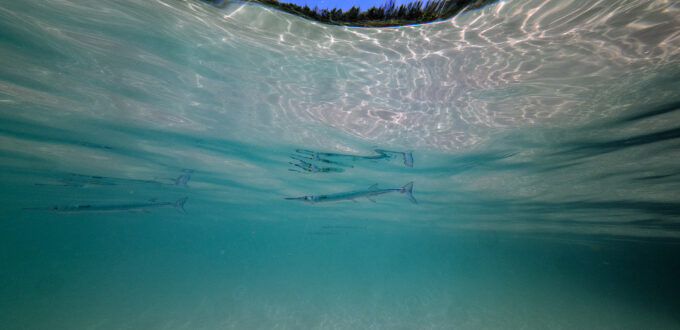
crocodile needlefish patrol the shallows

I often see needlefish when snorkelling around the Andaman Sea shores of Western Phuket and Peninsular Thailand. Needlefish, or long toms as they are commonly known in Australia, are predators of (mostly) small fish; They inhabit surface waters where their long, slender form and silvery scales render them almost invisible until quite close.  I generally encounter them hanging around the periphery of reefs, or cruising around piers, just beneath the surface, and sometimes in very shallow water, surfing in on small waves to where the water is only a few inches deep. They patrol these areas in small groups of up to a dozen or so, moving like hunting dogs, looking to sneak close enough to an unwary sardine or silverside to pounce. Usually they will suddenly launch themselves forward at speed into the school of small fish, hoping to grab one as they scatter. Off heron Island, on Australia’s Great Barrier Reef, they have been observed to launch aerial attacks; leaping clear of the water, to land amongst the unsuspecting school of bait fish. I’ve never personally observed this and as far as I know it’s never been recorded around Thailand.

A crocodile needlfish patrols the edge of a pier, looking for unwary sardines to form its next meal.

Needlefish have a reputation for being dangerous to swimmers and fishermen. While far from aggressive (they’re actually quite timid and tricky to approach close) there have been a number of injuries and indeed some fatalities caused by needlefish. The problem is that when needlefish feel threatened, they will often leap out of the water; long, low leaps, travelling at speed and covering some distance. I’ve seen speeds of 40 mph through the air mentioned, though I suspect this is little more than a guesstimate.  With their long, thin needle-like jaws it’s easy to see how being unlucky enough to be stuck by one could cause serious injury. In November 2020, a Hawaiian man out sea canoeing found himself in the middle of 30-40 needlefish leaping out of the ocean. Several stuck his canoe, one puncturing straight through the fibreglass canoe hull. In Nha Trang, Vietnam, in 2014, a Russian tourist was swimming when she felt a sharp pain in her neck. She was rushed to hospital suffering partial paralysis.  Emergency surgery removed fragments of needlefish jaw, and teeth, from around her spinal cord.  Fortunately she made a full recovery.  Though incidents can be very nasty they are also, thankfully, very rare. Fatalities are extremely rare, but do happen. In 2018 a young Thai cadet training with Thai navy special forces died after hit him in the neck during a military training exercise.  

There are probably more incidents that go unrecorded; local artisanal fishermen are generally at much greater risk due to the amount of time they spend in the water or in small boats, especially at night. Lights, often used to attract fish, are known to attract or create panic in needlefish, causing them to leap out of the water. In Papua New Guinea, for example, where fishing at night from small wooden outrigger canoes is a very common occurrence, numerous injuries are recorded every year.  The use of lanterns to attract fish appears to increase the risk. (You can read more about the outrigger canoes of Papua New Guinea in my blog here)

Should you be unfortunate enough to be struck by a needlefish while swimming or wading it is absolutely imperative that you get proper medical attention. Injuries to the arms or legs may seem minor, but the fish beaks can penetrate deep.  Teeth and jaw fragments will also frequently break off, remaining un-noticed within the wound.  In 2015, a passenger on a Caribbean cruise was struck on the nose by a needlefish while wading in waist-deep water. This left what appeared to be only a small wound that healed quickly. Three months later, after persistent nasal problems, a 39mm long fragment of needlefish beak was removed from the man’s sinus, the tip only 5mm away from the left frontal lobe of his brain.  In 2013 a Japanese swimmer received treatment after being struck in the lower eyelid by a needlefish, the wound was cleaned and all fragments thought to be removed. Swelling persisted and a subsequent CT scan found two 25mm long fragments above his eye, which were then surgically removed.  There is also a high risk of infection from such wounds, so treatment with broad spectrum antibiotics is normally recommended after any injury.

This may all make the seas sound a very dangerous place, but it’s worth keeping things in perspective. These events are rare.  Lightning strikes kill thousands worldwide every year. Tens of millions go swimming or fishing in tropical waters every year and suffer nothing worse than mild sunburn. Maybe don’t go fishing at night in a small canoe, carrying a spotlight.

I took these photographs of crocodile needlefish (Tylosurus crocodylus) snorkelling off a beach just north of Phuket Island. I had been hoping to photograph the large schools of sardines that were hiding underneath the long concrete pier there. Unfortunately a plankton bloom coupled with windy conditions and a strong swell made that pretty much a non-starter.  Visibility of less than three metres was not going to produce great images of large schools of fish. In addition, the low visibility and significant swell did not fill me with enthusiasm for diving down under the pier, the legs of which were covered in a thick blanket of razor-sharp oyster shells. I’d learned to my cost than a bump against those was not a pleasant experience. However, gazing down from the top of the pier I could see number of needlefish patrolling the edges and surfing in on breaking waves. So despite the unpromising sea conditions, and the fact that my camera was set up with a very wide-angle lens – not ideal for getting close to timid fish – I decided I was there now and so might as well get in the water.

The first picture was taken along the edge of the pier. I wanted to catch a needlefish in the light, but have the dark shadows under the pier behind it. This sounded straightforward, but, in reality, involved a lot of slow dancing around the edge of the pier, trying to get close, with the sun at the right angle whilst avoiding getting washed against the pier legs. I would carefully line up a shot only to have the fish disappear into the green haze. Eventually I got one that was acceptable.

A couple of crocodile needlefish cruise past me in shallow water.

The second shot was taken close in to the shore, in less than a metre of water.  Here in the shallows the light levels were high, but plankton combined churned up sand to reduce visibility further still.  Half a dozen needlefish continually moved in to the shore, then turned and circled back out, moving in and out of my vision as I bobbed in the waves. I switched everything to manual, including focus given the turbidity of the water, and concentrated on firing off shots as we, fish and I, warily waltzed around each other. After around 30 minutes I decided it was time to get out. The wind was increasing, and so were the waves. If I hadn’t got useable shots by then it wasn’t going to happen.

If you found this post interesting, you may also like my blog on pig tailed macaques in Thailand.

Other blogs of mine on Thailand wildlife include Fiddler crabs of Phuket Shores

Fine Art Landscape and Wildlife Prints

For more stories, made to order framed wall-art canvas wrap prints, fine art prints, posters, stock images and more stories, visit my main site: www.colinmunrophotography.com

ColinMunroPhotography.com Colin Munro Photography fine art prints direct from the photographer
colinmunrophotography.com

I write these posts primarily because I enjoy doing so. They’re free to read, and if you enjoyed reading this one I hope you’ll continue to read them (maybe even subscribe to my blog). I have no plans to paywall any of them. If you feel like you want to support my time input, well … I do like good coffee.

Buy Me A Coffee

P.S I am now also on Substack

Colin Munro Photography on  Substack

Stock Images

I license many of my images as stock images for use in journals, magazines, books, websites etc. A number of my images can be found and licensed on Alamy. You can also contact me directly to license images. I also have a great many images not currently online.

Colin Munro Photography stock images on Alamy
Colin Munro Photography on Alamy

Limited Edition Prints

Limited Edition Prints

Andaman Sea sunset limited edition

I’ve finally bitten the bullet and made some of my photographic images available as limited edition prints. Okay, that’s not quite true. To be more precise I’ve actually made one of my photographic images available as a limited edition print. But … the intention is that more will follow, and all working out there will be a series of limited edition prints. I am making this image available in two sizes: 96 x 66cm and 50 x 34cm. Only 75 of each size will be produced.

Andaman Sea sunset. A limited edition print. Limited edition photographic print by Colin Munro Photography. An image of a sunset over the Andaman Sea taken from Phuket, Thailand. Limited edition prints. @Colin Munro Photography www.colinmunrophotography.com
Andaman Sea Sunset. My first limited edition print
(signature not across actual print, of course).

And there it is, my first limited edition print, Andaman Sea sunset. I took this from a beach on the west coast of Phuket, Thailand, in late 2020, looking out over the Andaman Sea (sometimes known as the Burma Sea). One of the advantages of photographing sunsets along the Thailand coastline is that they are often spectacularly beautiful. One of the disadvantages is that I frequently end up standing in ankle deep water, as far from human habitation as possible, when most sensible folks are having their sundowner beer (or rum and coke, or whatever your tipple happens to be). I took this particular shot on a pretty low tide so I could get far out among the rocks and pools exposed at low water. As darkness descended the sea had already begun to return, and my feet and the bottom of the legs of my camera tripod had already disappeared underwater. Part of me kept saying ‘just one more shot before the light disappears completely‘ whilst the more sensible part of my brain kept reminding me ‘you do know you’ve got about 300 metres of rocks to clamber over in darkness, with two tripods, three cameras and rucksack full of lenses, before you reach dry sand?‘.

All my limited edition prints come with a signed, embossed label detailing the image, the number that image is in the edition (e.g. no. 5 of 75) and a unique, traceable ID code. They also come with a Certificate of Authenticity. This contains the same information as the label, plus a thumbnail image of the photograph, a little bio about me and about the printing process.

You can purchase these limited editions only through me via my website. Currently I’m offering free delivery within the UK (outside the UK please contact me for delivery options and costs). Each print and frame is made to order. You can view them here www.colinmunrophotography.com and just click the Limited Editions tab in the top menu.

Fine Art Landscape and Wildlife Prints

If you enjoyed this story why not check out my other blogs. I write about travel, the environment, marine biology, diving and wildlife. You may also want to check out my photographic prints. These can be viewed on my main site www.colinmunrophotography.com and include landscapes from around the World, people of the World, marine life and other wildlife. The prints are only available through my website, each one individual processed and made to order. This includes fine art giclee prints, limited edition prints and canvas wraps. I use only the best, carefully selected print houses employing the finest papers and printing processes to ensure image fidelity and longevity.

fine art wildlife and landscape prints for sale. Colin Munro Photography www.colinmunrophotography.com
A sample of my fine art prints for sale