Coconut palms trees and white sand beach and blue sky, Tapuaetai island (one foot island), Aitutaki atoll, Cook Islands. Image MBI000566.
.Coconut palms trees and white sand beach and blue sky, Tapuaetai island (one foot island), Aitutaki atoll, Cook Islands. Image MBI000566. Please email me, quoting this number if you’d like to license use of this image or purchase a fine art print.
Aitutaki, Cook Islands, South Pacific.
Position 18° 51? 0? S, 159° 47? 24? W (WGS84).
I wrote recently that bright sunshine and blue skies did not feature in my photography. Okay, i lied! I doesn’t feature that often, but when it comes to South Pacific islands what else can one do? Aitutaki, Cook Islands, must be one of the most idyllic places on earth; sunshine, pristine white beaches, warm clear waters teeming with life, coconut palms and wonderful friendly people. I, like most people who visit I suspect, felt my time there was all too short. I’ve limited this post to a a couple of beach views and pictures of coconut palms (there wil be more). Aitutaki is a coral atoll, the second largest of the Cook Islands (after Roratonga) and also the second most visited. The atoll comprises 22 islands in total; the largest, central island is Arutanga. The remaining islands lie on top of the traingular fringing coral reef that encloses the lagoon. Tapuaetai island (one foot island,) where these images were taken, is located near the southern tip of the fringing reef. it is a small island of sand and coconut palms, less than a kilometre across.
Recently germinated coconut palms trees ( Cocos nucifera) on a white sand beach, Tapuaetai island (one foot island), Aitutaki atoll, Cook Islands, South Pacific. Image MBI000904.
.Recently germinated coconut palms trees ( Cocos nucifera) on a white sand beach, Tapuaetai island (one foot island), Aitutaki atoll, Cook Islands, South Pacific. Image MBI000904. Please email me, quoting this number if you’d like to license use of this image or purchase a fine art print.
The coconut palm, Cocos nucifera, is a member of the family Arecaceae (palm family). It is found around the tropics. The cocnut seed is buoyant and may be distributed widely by ocean currents. Coconut palms flourish in sandy soils and are tolerant of high salt levels. They grow fastes where mean annual temperates are around 80 degree F (27 degrees C).
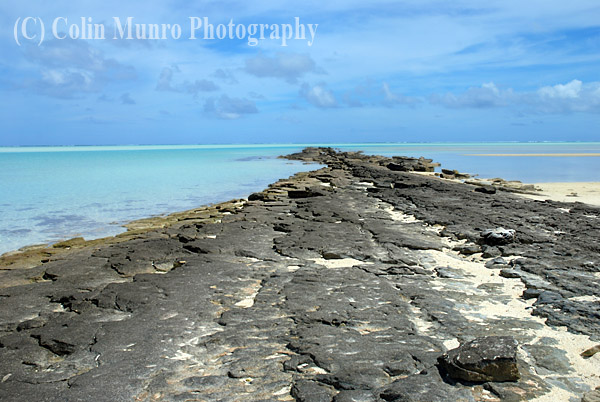
Coral platform, Tapuaetai island (one foot island), Aitutaki atoll, Cook Islands, South Pacific. Image MBI000905.
. Coral platform, Tapuaetai island (one foot island), Aitutaki atoll, Cook Islands, South Pacific. Image MBI000905. Please email me, quoting this number if you’d like to license use of this image or purchase a fine art print.
Coconut palms trees and white sand beach and blue sky, Tapuaetai island (one foot island), Aitutaki atoll, Cook Islands. Image MBI000906.
Coconut palms trees and white sand beach and blue sky, Tapuaetai island (one foot island), Aitutaki atoll, Cook Islands. Image MBI000906. Please email me, quoting this number if you’d like to license use of this image or purchase a fine art print.
Recently germinated coconut ( Cocos nucifera) on a white sand beach. Image MBI000907.
Recently germinated coconut ( Cocos nucifera) on a white sand beach. Image MBI000907. Please email me, quoting this number if you’d like to license use of this image or purchase a fine art print.
A large female tiger shark, Galeocerdo cuvier, known locally as Scarface due to the long scar down the left-hand side of her face,
Large female tiger shark, Galeocerdo cuvier, known locally as Scarface, Beqa Lagoon, Fiji. Image MBI000479. Please email me, quoting this number if you’d like to purchase a fine art print.
Beqa Lagoon is often described as the World’s best shark diving location and I, for one, would not dispute that. I dived here with Rusi, Papa, Andrew and the team from Beqa Action Divers. I wouldn’t hesitate to recommend these guys, I couldn’t have asked for a more conservation-orientated team with a great laid back attitide. At the same time the whole operation was extremely professional, making the diving run as smooth as clockwork. Above water the location is simply stunning; lush forest and magrove bordering the Navua River which empties into the sheltered lagoon. These are not, however,the crystal clear waters of , say, the Bahamas. In Fiji it rains a lot. A lot! River waters pour in to the lagoon; rarely seriously reducing visibility but just enough to reduce light levels and create slightly gloomy effect at depth. In my opinion this rather adds to the atmosphere of the place; a big tiger or bull shark appearing out of the gloom is somehow more impressive than one cruising across a bright sunlight seabed. The key location for bull sharks and tigers is near the outer edge of the lagoon, where it meets the open ocean, dropping into very deep water indeed. This has the advantage that you are furthest from the freshwater inputs, so the water is much clearer. Bulls and Tigers patrol the lower part of the reef slope, rising up to the ledge at about 30 metres (100 feet) at which the deepest part of the dive is conducted. I was generously allowed to position myself directly behind Tubee, who had the unenviable task of hand-feeding feeding the sharks with large chunks of tuna. I thus had a perfect view as they cruised in, then swept past overhead (sometimes requiring a slight nudge to help them clear me).
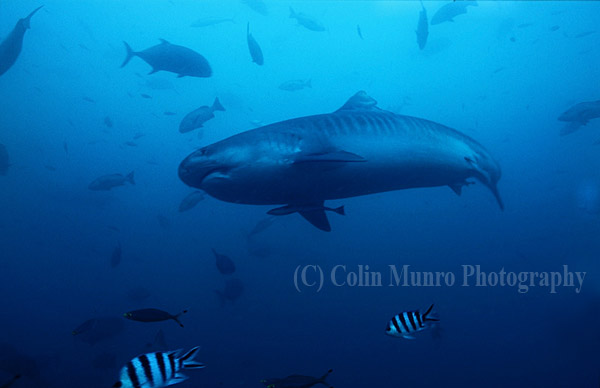
Close up of a large female Tiger Shark known as \’Scarface\’ swimming at around 30 metres depth, Beqa Lagoon, Fiji. Image MBI000474.
Close up of a large female Tiger Shark known as Scarface; swimming at around 30 metres depth, Beqa Lagoon, Fiji. Image MBI000474. Please email me, quoting this number if you’d like to license use of this image or purchase a fine art print. The tiger shark in these photographs is a lady known as scarface, due to the long scar running down from the right side of her jaw (the result of a fish hook). She is probably about 4-4.5 metres long (14-15 feet), so is a pretty big fish. She has been returning to the lagoon for several years, so is well known to the divers there. The first sign of her imminent appearance was the moving away of the bulls as they became aware of her presence; she then glided in to view, making a couple of circles to inspect the scene before deciding to head for the food. Although she has an impressive sense of smell her eyesight is not great; so provided you don’t move too much like food, or smell like food (slightly tricky when the water is full of tuna flakes) then you’re pretty much okay.
Large tiger shark, Galeocerdo cuvier, swimming towards diver, Beqa Lagoon, Fiji. Image MBI000486.
Large tiger shark, Galeocerdo cuvier, swimming towards diver, Beqa Lagoon, Fiji. Image MBI000486. Please email me, quoting this number if you’d like to license use of this image or purchase a fine art print.
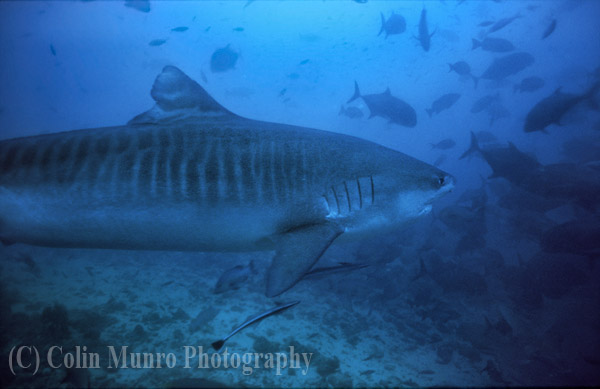
Large female Tiger Shark \’Scarface\’ swimming at around 30 metres depth, Beqa Lagoon, Fiji. Image MBI000476.
Large female Tiger Shark, Scarface, swimming at around 30 metres depth, Beqa Lagoon, Fiji. Image MBI000476. Please email me, quoting this number if you’d like to license use of this image or purchase a fine art print. I took these shots on film, my last serious trip underwater with a film camera. The plus side is they produced huge images (20+megapixel images). The down side was I only had 100iso film and so was really struggling with light; even with a fast, wide prime lens (20mm) I was still down at 15th of a second shutter speed thus had to be pretty steady to get useable shots. Just to add to my problems, the auto-manual focus switch on my housing stopped working, leaving me stuck in autofocus. In such low light, low contrast conditions the autofocus was hunting like crazy. After losing a couple of perfect shots due to the camera failing to focus in time I resorted to the technique of waiting until a shark was approaching, deciding on the distance I was going to take the pic, then turning and pointing the camera at some coral rubble by my side that was about the same distance, locking focus, then with shutter half depressed turning and shooting once the shark was close enough. Needless to say this drew some curious looks from my Fijian friends; why on earth was I staring at a lump of rock to the side of me when a big shark was heading straight towards me, but hey! It worked.
A large female tiger shark, Galeocerdo cuvier, cruising near the seabed, beqa lagoon, Fiji. Image No. MBI000484
In you enjoyed this blog please consider subscribing. You can do this using the simple subscribe form
Fine Art Landscape and Wildlife Prints
Some of the framed canvas wrap prints on my website. You can also check out my fine art prints and posters.
Skye Bridge, Kyle of Loch Alsh at sunset, looking across the Isle of Skye..
Skye Bridge, Kyle of Loch Alsh at sunset, looking across the Isle of Skye. Image MBI000901. Please email me, quoting this number if you’d like to license use of this image.
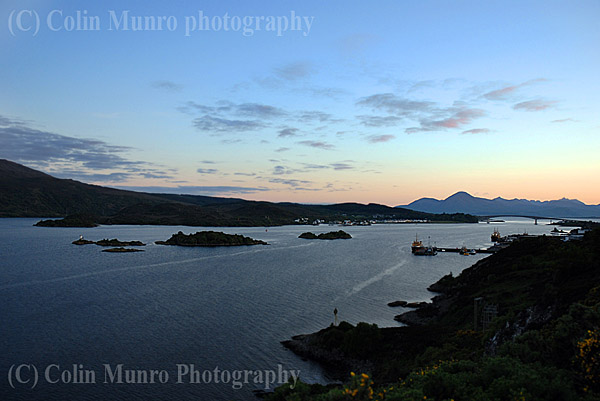
The Skye Bridge, Kyle of Lochalsh, is simultaneously one of the most impressive and contentious feats of recent engineering in Scotland. Completed in 1995, it sparked much debate about how it would change the nature of Skye now it was possible to drive there. More heated debate arose over the much hated toll to cross the bridge. It was described by some as ‘the only place you could get mugged and then receive a receipt’. The toll was abolished in 2004. Crossing to and from the mainland is now free. The village of Kyleakin lies on the Skye side of the bridge, with the small islet of Eilean Ban forming a stepping stone roughly mid-way across. Both locations featured heavily in the life of Gavin Maxwell, and were made famous in the book ‘Ring of bright water’. The island now belongs to the Eilean ban Trust, a joint project between the Born Free Trust and local communities. The Eilean Ban lighthouse can be seen in the last picture.
Loch Alsh at sunset, looking west towards the Kyle of Lochalsh and the Skye Bridge. Image MBI000902.
Loch Alsh at sunset, looking west towards the Kyle of Lochalsh and the Skye Bridge. Image MBI000902. Please email me, quoting this number if you’d like to license use of this image.
Skye Bridge and village of Kyleakin on the east coast of the Isle of Skye. Image MBI000903.
Skye Bridge and village of Kyleakin on the east coast of the Isle of Skye. Image MBI000903. Please email me, quoting this number if you’d like to license use of this image.
Yachts silhouetted just before dawn, San Diego harbour. Image MBI000899.
San Diego Harbour just before dawn. San Diego, California, USA. Image No. MBI000889. Please email me, quoting this number if you’d like to license use of this image.
Those of you with way too much time on their hands may have noticed that reflections on water is a recurring theme in my images. I know its a cliche, but hey! Cliche images only become so because they work. The images I’ve uploaded span a good few years; although most were taken in the past four, the Loch Ness image pre-dates that by quite some time. Consequently the pictures include both digital and film originated images. I’ve also chosen pictures from around the World: from San Diego’s bay-side to rural Devon,Southwest England, through to the Navua River creek at the southern tip of Fiji’s largest island Viti Levu, and back to the northern hemisphere to the shores of Loch Ness, northern Scotland during a particularly hard winter. You won’t find a great many bright summer days amongst my pictures. Not that I don’t enjoy the sun as much as anyone else, but it’s rarely dramatic. I much prefer the low light of dusk and dawn or winter days when the sun bobbles along the horizon, creating light and shadow that I can play with. Although I cut my teeth working underwater with a purely mechanical camera devoid of even a light meter, I’m not really a purist and will use Photoshop or whatever tools are at my disposal to enhance an image. To me it is not that different from dodging and burning photographic paper. However, you don’t great create a good image from a mediocre one straight out of the camera. For me at least, what I see through the lens in 95% of the final image and getting that image on to the camera’s sensor is 95% of the work. Everything after that is dressing. Two of the photographs were taken in the 30 minutes or so before dawn. For me that’s a magical time; very still, the World haven not fully woken. A not-so-magical time is when my alarm goes off at 4:30a.m., but if I do force myself out of bed it is often well worth the effort. The final image of Exeter historic quay was actually an evening shot, around 9p.m. on a warm evening in early June. The sun had just set, leaving a dramatic sky but with most of the quayside in deep shadow. To bring out this detail I created an HDR (High Dynamic Range) image as a composite from four seperate images covering (if memory serves me correctly) six full stops. The images were then processed using Photomatix and Photoshop. The hardest part of compilations like these are what to leave out. Thus reflections is a theme I will no doubt return to, with a ‘Reflections’ gallery up soon. All feedback, including reports of any gliches, most welcome.
Colin
The Turf Locks Pub, Turf Lock, Exeter Canal, Devon, England. Image No MBI000900
The Turf Locks Pub, Turf Lock, Exeter Canal, Devon, England. Image No MBI000900. Please email me, quoting this number if you’d like to licence use of this image.
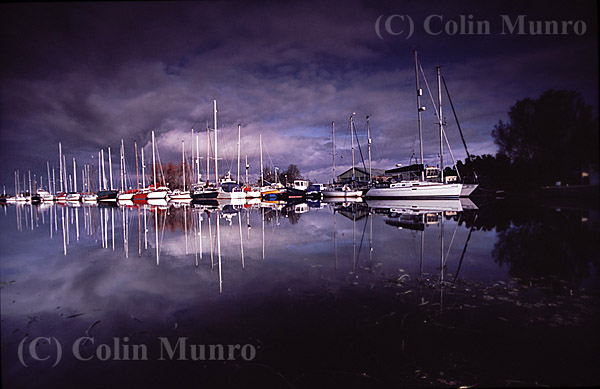
Yachts reflected on the calm waters of Exeter Canal on a winter's day. Image MBI000775.
Yachts reflected on the calm waters of Exeter Canal on a winter’s day Image No. MBI000775. Please email me, quoting this number if you’d like to licence use of this image.
Sunrise over the Navua river near the mouth at Beqa Lagoon, Viti Levu, Fiji. Image MBI000583.
. Sunrise over the Navua River, Viti Levu, Fiji. Image No. MBI000583. Please email me, quoting this number if you’d like to licence use of this image.
Frozen birch trees and snow-capped mountains reflected on the waters of Loch Ness, Scotland,. Image MBI000124
Frozen birch trees and snow-capped mountains reflected on the waters of Loch Ness, Scotland. Image No. MBI000124. Please email me, quoting this number if you’d like to licence use of this image.
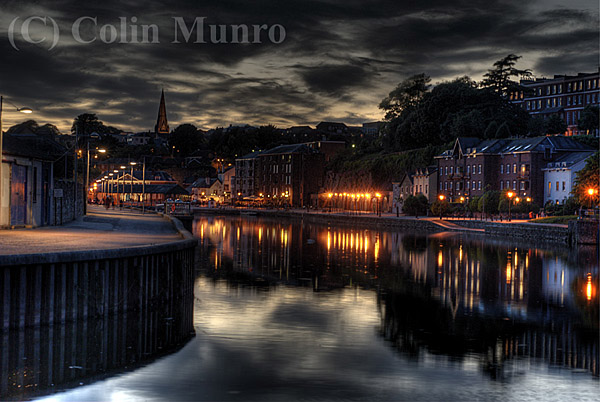
Exeter quayside at night. Exeter's historic quayside. Devon, England.
.Exeter quayside at night. Exeter’s historic quayside. Devon, England . Image No. MBI000890. Please email me, quoting this number if you’d like to licence use of this image.
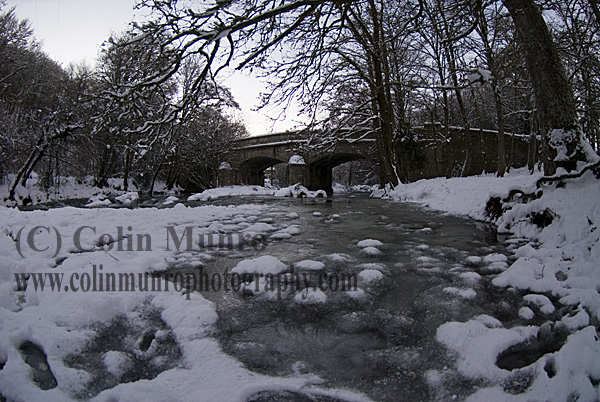
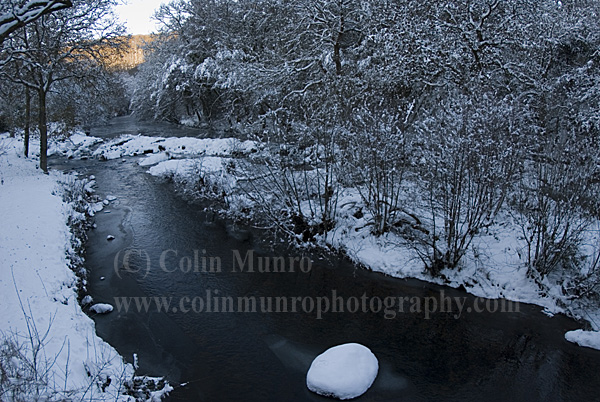
Steps Bridge, River Teign, Dunsford Wood, in mid-winter
This has turned out to be one of the coldest Christmas days on record here in South Devon. Living on a boat, this has not escaped my attention. I haven’t been moving too far from the woodburner stove at night. For the second winter in a row I’ve been locked in ice for weeks on end. Around 2a.m. this morning I was woken by a loud bang and the whole boat shuddering strongly. It was around minus 10 Centigrade (~14deg F) and Maria had shifted as the ice thickened and expanded. Maria weighs around 30 tons. I climbed on to deck to check the thickness of the ice. A few hard thumps with an old wooden oar succeeded only in sending gunshot-like sounds ricocheting through the night and splintering the blade of the oar. I gave up and retired to bed. Maria is very stoutly built with oak frames at 11″ spacing, she wasn’t about to be crushed. I just don’t want the ice to get any thicker.
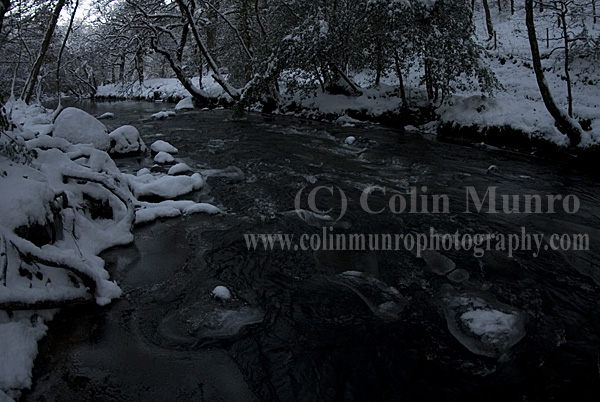
River Teign partially frozen, Dunsford Wood, South Devon, UK.
Christmas day was perfect: clear blue skies and crisp white snow underfoot. So after doing the family stuff in the morning I decided to take my son Calum walking in the Teign Valley through Dunsford Wood. It would certainly give us an appetite for Christmas dinner. Dunsford Wood is owned by the National Trust and Managed by the Devon Wildlife Trust, with footpaths through the woodland and along the riverbank open to the public. In summer it is a great place to see huge wood ant colonies and the rare High Brown Fritillary butterfly. Year round it’s a great place to walk; light open oak, hazel and ash woodland on one side and on the other the river lazily gliding past (or thundering past, depending on season). As it happened, the river was doing neither along much of the walk on Christmas Day; or if it was drifting past it was doing so beneath a carapace of ice. We were lucky enough spot a couple of dippers (Cinclus cinclus) as we walked ( a first for my son). We watched one for several minutes as it skipped between sheets of ice-covered river, occasionally slipping beneath the surface where it found ice-free water. Unfortunately the sun was already low and the only long lens I had with me was way too slow, so I didn’t bother getting it out. As the sun set and the temperature plumetted we headed back to the landrover hoping that the stove would still be going when we got back to the boat.
River Teign partially frozen, Dunsford Wood, South Devon, UK.
Snow-covered upland oak woodland along banks of the River Teign, Dunsford Wood, South Devon, UK.
As always my images are available to license and as fine art prints. If you’d like to use one of my images for publication please contact me. If you’d like a print of one of the images drop me an email stating image number and print size (costs for prints can be found on my fine art prints pages, e.g. Fine Art prints of Devon. Email me.
To my main website www.colinmunrophotography.com
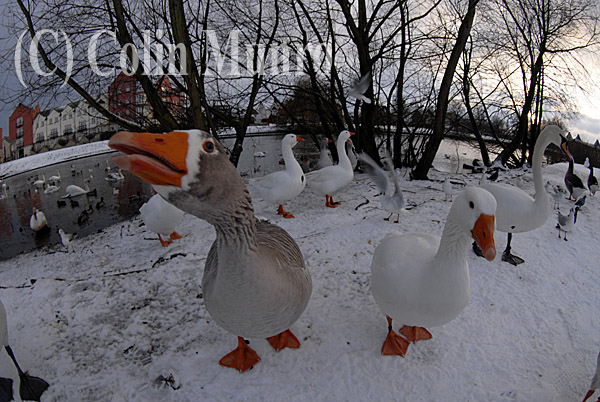
Hungry geese paddle across the snow-covered footpath on Exeter's Quayside
This image is for sale at Alamy, click here and search for geese, snow, Exeter.
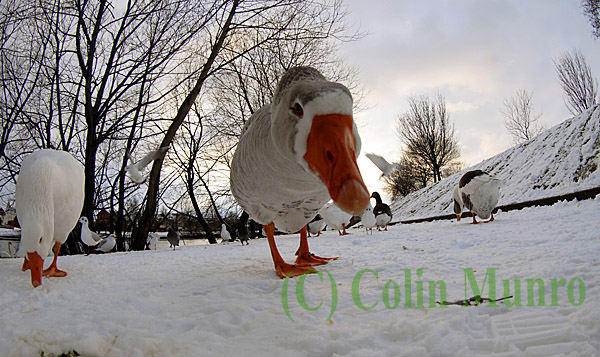
Snow has finally arrived in Exeter, just in time for Christmas! Despite sub-zero conditions that have lasted for weeks we have escaped the heavy snowfalls that have paralysed much of the UK. This morning I woke to a couple of inches in light, fluffy snow covering my boat, and pretty much everything else. Just enough to look pretty without causing too much disruption.
Close up of an inquisitive goose in snow, Exeter Quayside
This image is for sale at Alamy, click here and search for geese, snow, Exeter.
Close-up of inquisitive goose standing in snow, Exeter Quayside
This image is for sale at Alamy, click here and search for geese, snow, Exeter.
Mute swans (Cygnus olor) congregate under Cricklepit Bridge
One of the advantages of living on a boat is that you get to see a lot of aquatic life go past. Exeter is famous for its mute swans (Cygnus olor) with congregate in large numbers on both the River Exe and the Exeter Ship Canal. The swans have become very used to the tourists and locals strolling along the river and canal side in the centre of town, so much so they even nest next to the footpath in the heart of town. At this time of year pairs of swans can be seen cruising around guarding clutches of fluffy grey signets. The adults will shepherd the signets along, occasionally pulling bits of weed off the botton for the youngstesr to feed on, or paddling furiously with their webbed feet to stir up weed in the shallows for them.
Mute swan cygnet (Cygnus olor) only a few days or weeks old.
Mute swan cygnets (Cygnus olor) feeding in shallows.
Mute swan cygnets (Cygnus olor) swimming.
A pair of mute swan (Cygnus olor) cygnets swimming, Exeter Ship Canal.
As always my images are available to license and as fine art prints. If you’d like to use one of my images for publication please contact me. If you’d like a print of one of the images drop me an email stating image number and print size (costs for prints can be found on my fine art prints pages, e.g. Fine Art prints of Devon. Email me.
To my main website www.colinmunrophotography.com
Exeter historic quayside at night. Cafe live on a warm summer night, Exeter, Devon.
Feels like summer has finally arrived. We’ve had a few great days recently, and for once it’s co-incided with schools half-term so I’ve had the chance to take get the boogie board out with my son, rather than watching DVDs as rain lashes the windows (the norm for holidays!). I’ve been playing around with High Dynamic Range images a little bit recently. I’m not always keen on the effect, sometimes it works for me sometimes its just too lurid.
There has been a quay in Exeter since Roman times; the main trade was wool and woolen cloth, with the Customs House being built in 1680 to collect taxes on this burgeoning trade. The square riggers and the trade has long gone but many of the fine old buildings remain, converted now to cafes, bars and craft shops. I took these two images while out bat watching along the river bank with my kid (an extra treat as way past his normal bed-time). Each image is a composit of three long exposure images (these varied from 1/8th to around a second, from memeory). I actually took around 10 images of each scene but selected only three for the final images.
Exeter quayside at night. Cafe life along the river Exe by Exeter's historic quay in central Exeter, Devon, on a warm summer evening.
Larger images (and additional images of Exeter) can be viewed by clicking on this link here. If there is sufficient interest I may produce some prints of these images for sale.
Sunrise over the Navua river near the mouth at Beqa Lagoon, Viti Levu, Fiji. Image MBI000583
A couple of years ago I was fortunate enough to spend a little time on the islands of Fiji. This included a couple of days on the Navua river. I was there mostly to photograph bull and tiger sharks in Beqa Lagoon but the sheer beauty of the area was a real bonus. These shots were taken around 5am, just as the horizon began to lighten. It’s an incredibly tranquil place; the only sounds were the waking calls of a few parakeets and birds I did not recognise, plus the occasional ‘plop’ as a startled mudskipper dropped off a low hanging branch. I’ll be adding some of the Fiji landscapes to the prints for sale section of my website soon. if interested just email me.
As always my images are available to license. If you’d like to use one of my images please contact me
Sunrise and reflections, Navua river near the mouth at Beqa Lagoon, Viti Levu, Fiji.MBI000584
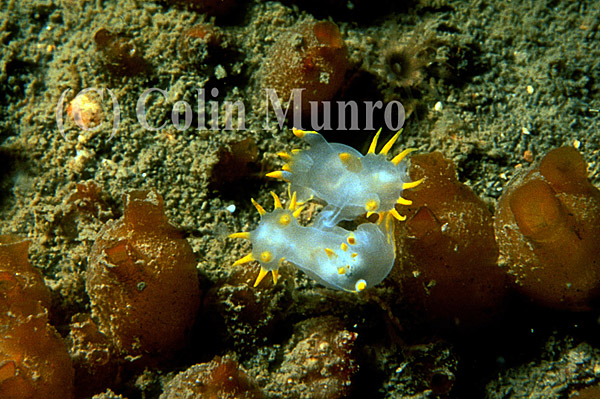
The seaslug, or nudibranch, Polycera faeroensis mating. Like all nudibranchs, Polycera faeroensis is a simultaneous hermaphrodite. Image MBI000678
Spring is in the air, the sea is getting warmer – slowly – and the birds and bees, and most things beneath the waves too. Polycera faeroensis is a very common seasulg in British waters, and although colourful is often overlooked due to its small size, large individuals are no more than 4.5 centimetrs long. Like all nudibranchs they are simultaneous hermaphrodites – possessing both male and female sex organs at the same time (sequential hermaphrodites have either only male or only female sex organs at any given time). Copulation works both ways (reciprocal copulation, as it is termed). As the sex organs always appear to be on the right side or their bodies, Polycera faeroensis nudibranchs copulate head to tail. The missionary position has not caught on in the nudibranch world. One might think this was already exciting enough for any mollusc, but some nudibranchs, (such as the related Palio dubia found around the northern Uk shores) add a touch of S & M to their sex lives. Unlike many nudibranchs, Palio dubia does not have a complete vaginal opening. Thus copulation occurs by hypodermic injection; the barbed penis (or penile cirrus as it is properly termed) simply punctures the body wall into its mating partner. Ouch!
As always my pics are available to license – if you’d like to use one just email me